Posts

Showing posts with the label Spinner

Ben Jewell's Slough Creek Spinner a step-by-step

Image
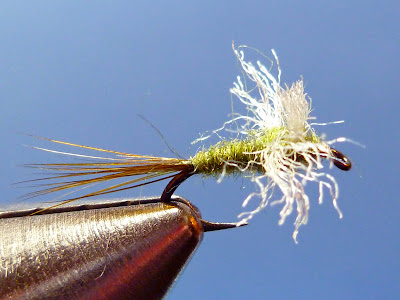
Ben Jewell's - Slough Creek Spinner Fishing Yellowstone National Park's famous Slough Creek can be a real test of skill and fly fishing knowledge.  The Cutthroat trout are tough to catch and by mid-season have seen most every fly available.  Knowing a few key flies and how and when to fish them can make all the difference. There are a few flies I would not be without on Slough, this is one of them.  That's why my fellow guide Ben named it as such.  Anytime you see a fly with a creeks name, and you are going to fish that creek....... Yeah, you're going to want some of those. an average Slough Creek Cutt'y... I enjoy tying this fly even though it has more materials than I like and they can be troublesome to manage. Here you see wing bundles, each made up of white and dark gray Widow's Web and 2 strands of Krystal Flask.  Turkey rounds of Gray-olive biots are used to wrap the body and moose  body hair is spilt to form the tails. usi...
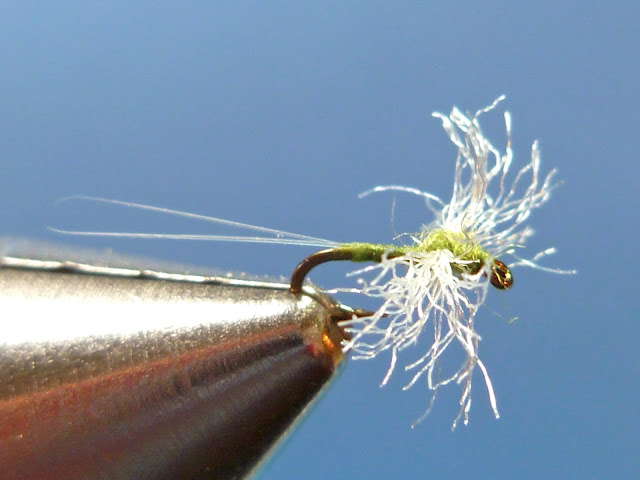
BWO Spinner in size #22

Image
I've been tying a bunch of these little buggers lately... Depending on the number of insects on the surface of the water, I like to fish this mayfly spinner as a dropper fly both on the surface and below.  I like to go the opposite.  If there are a lot of insects floating spent on the surface, then I fish this fly as a drowned BWO.  If there are only a few mayfly spinners on the surface, then I float this fly.  I don't want my fly to compete with the hundreds of real spinners available, I want the odds in my favor, so should you! BWO Spinner size #22 tied and photographed by Doug Korn materials list: hook: size #22 dry thread: MFC olive 8/0 tails: micro brush fibers body: MFC olive thread 8/0 wings: Needloft yarn in white - which will be a reflective clear in the water. thorax: DK#4 olive dubbing

BWO Posted Spinner

Image
A simple fly to tie with a sighting post making it more visible to the angler.  Wings are tied in on top of shank, with the back portion divided forming the wings. The front portion is used to then form the post. Rear view of post and wings.